My first thought when starting Photoshop this morning: "Why does Photoshop need to know my location? I should turn that off."

My first thought when starting Photoshop this morning: "Why does Photoshop need to know my location? I should turn that off."

Windows 1.0 shipped on November 20, 1985, making today the 25th birthday of Windows. Happy Birthday, Windows. What a long, strange trip it has been.
A few months ago I posted a description of how to use SIOCGIFCONF to retrieve information about interfaces. SIOCGIFCONF is somewhat clunky in that you use an ioctl to find out how many interfaces are present, allocate enough memory to retrieve them all, and then issue another ioctl to actually get the information. To handle the vanishingly small chance that more interfaces will be added during the time you spend allocating memory, a fudge factor of 2x is added to the memory allocation. Because, you know, its not likely the number of interfaces would double.
That was all very silly, and as it turns out in Linux there is a much better API for retrieving information about interfaces: getifaddr(). The call handles memory allocation so you don't have to pass in a buffer of sufficient size, though you do have to call freeifaddrs() afterwards to release the memory. getifaddrs allows each protocol family in the kernel to export information about an interface. The caller has to check the address family of each returned interface to know how to interpret it. For example, AF_INET/AF_INET6 contain the interface address, while AF_PACKET has statistics. Example code for these three families is shown here.
#include <arpa/inet.h>
#include <sys/socket.h>
#include <netdb.h>
#include <ifaddrs.h>
#include <stdio.h>
#include <stdlib.h>
#include <unistd.h>
#include <linux/if_link.h>

int main(int argc, char *argv[]) {
  struct ifaddrs *ifaddr;
  int family, s;

  if (getifaddrs(&ifaddr) == -1) {
    perror("getifaddrs");
    exit(1);
  }

  struct ifaddrs *ifa = ifaddr;
  for (ifa = ifaddr; ifa != NULL; ifa = ifa->ifa_next) {
    if (ifa->ifa_addr != NULL) {
      int family = ifa->ifa_addr->sa_family;
      if (family == AF_INET || family == AF_INET6) {
        char ip_addr[NI_MAXHOST];
        int s = getnameinfo(ifa->ifa_addr,
                            ((family == AF_INET) ? sizeof(struct sockaddr_in) :
                                                   sizeof(struct sockaddr_in6)),
                            ip_addr, sizeof(ip_addr), NULL, 0, NI_NUMERICHOST);
        if (s != 0) {
          printf("getnameinfo() failed: %s\n", gai_strerror(s));
          exit(1);
        } else {
          printf("%-7s: %s\n", ifa->ifa_name, ip_addr);
        }
      } else if (family == AF_PACKET) {
        struct rtnl_link_stats *stats = ifa->ifa_data;
        printf("%-7s:\n"
               "\ttx_packets = %12u, rx_packets = %12u\n"
               "\ttx_bytes   = %12u, rx_bytes   = %12u\n",
               ifa->ifa_name,
               stats->tx_packets, stats->rx_packets,
               stats->tx_bytes, stats->rx_bytes);
      } else {
        printf("%-7s: family=%d\n", ifa->ifa_name, family);
      }
    }
  }

  freeifaddrs(ifaddr);
  exit(0);
}
On my system the output is as follows (though I've obscured the addresses):
lo     :
        tx_packets =     16714641, rx_packets =     16714641
        tx_bytes   =   1943837629, rx_bytes   =   1943837629
eth0   :
        tx_packets =    102862634, rx_packets =    118537985
        tx_bytes   =   3472339330, rx_bytes   =    698859563
gre0   :
        tx_packets =            0, rx_packets =            0
        tx_bytes   =            0, rx_bytes   =            0
lo     : 127.0.0.1
eth0   : 10.0.0.1
lo     : ::1
eth0   : 1111:1111:1111:1111:a800:1ff:fe00:1111
eth0   : fe80::a800:1ff:fe00:1111%eth0
A modest suggestion to increase the speed of light resulted in interesting discussion which I would like to highlight by Kit Dotson at SiliconANGLE and by Howard Marks at Network Computing. Howard Marks wrote about details of the chemistry of fiber optic cables, in particular that the index of refraction is related to the density of the material. A fiber with a 10% lower index would be less dense than water, which makes it unlikely to be practical. C'est la vie.
 Also I'll state again: the speed of light in fiber only matters for wide area links. The propagation delay in 100 meters of fiber is dwarfed by queueing and software delays, to the point of insignificance. In fact if we could reduce the cost or power consumption of short range lasers by making the speed of light even slower in the fiber they drive, that would be a good tradeoff.
For long range links things become more interesting. Internet lore says that Amazon found each 100 msec of page load time resulted in a 1% increase in abandoned transactions, though I cannot find a hard reference for this data. E-commerce is heavily studied as there is money involved, but general satisfaction with a website increases when it has "teh snappy." This isn't just a function of bandwidth: most web pages require multiple round trips to fully render, owing to the pervasive use of JavaScript to trigger the loading of additional page elements. The round trip time matters.
For long reach fiber the useable spectral capacity is probably the most important factor, as this determines the numer of wavelengths it can carry and is the primary economic justification. Long reach fibers also have to trade off clarity (i.e. loss of signal) because that determines how far apart the amplifiers/regenerators have to be. This is where I'd throw the index of refraction into the mix, as another factor to be weighed and optimized for.
 In January JP Morgan predicted that Intel would acquire an FPGA vendor in 2010. Speculation immediately focussed on Altera and Xilinx, which are large enough to have a material impact on Intel's sales. I wrote about it then, speculating that Intel would use the technology to get into various embedded market segments without needing a zillion SoC variants. Choose a die with appropriate I/O pins, load the logic into FPGA blocks alongside the CPU, and voila!
Yesterday the Wall Street Journal reported that Intel is opening their fabs to Achronix Semiconductor, a startup with interesting FPGA technology. The Achronix home page highlights what is presumably the immediate benefit to Intel, in unlocking additional sales to US military and intelligence agencies.
Presumably the agencies interested in using these parts want to embed optimized hardware to offload algorithms from software. This can be necessary for some applications, if the customer has the resources to implement it. The desire for an on-shore supply chain which can be audited is in reaction to the inadvertent use of counterfeit chips in previous military systems.
Achronix is using branding for the product line which looks remarkably like Intel's, and it seems certain the deal has provisions for cancellation or modification upon change of control to another party. This announcement also amounts to Intel marking their territory for an acquisition.
DoD requirements notwithstanding, there are relatively few applications where embedding algorithms in FPGAs makes sense. The drawback has never been a technological one, in requiring closer cooperation between CPU and FPGA. It is a business issue: once you commit to a specialized hardware design, the clock starts ticking. There will come a day when a software implementation could meet the requirements, and at that point the FPGA becomes an expensive liability in the BOM cost. You have to make enough profit from the hardware offload product to pay for its own design, plus a redesign in software, or the whole exercise turns out to be a waste of money.
There is another quote on the Achronix technology page which is quite relevant:
Being able to select various I/O drivers for a pin in an FPGA is relatively common, but generally quite limited. Very high speed SERDES pins often cannot be reassigned or are restricted in what else they can be used for, because the high speed interface is sensitive to layout and loading. If Achronix has developed robust I/O muxing with more flexibility, this would be very interesting to Intel. It gets them closer to having a small selection of silicon dies, with different IP loads to target specific markets.
Using FPGAs as a way to tailor chips for specific markets makes a lot more sense than algorithm offload, IMHO. This provides products which could not otherwise exist, as it would be difficult to justify the incremental cost of each different chip. Amortizing the cost of silicon development over a much larger number of different applications makes more sense.
Earlier today Louis Gray posted 20 Halloween Scares to Put Fear Into Every Google Fan. I left a few more as a comment on that post, and made up even more for your edification and bemusement.

 Fiber optic strands have a central core of material with a high refractive index surrounded by a jacket of material with a slightly lower index. The ratio of the two is set to cause total internal reflection, where the light is confined to the central region and won't diffuse out into the cladding.
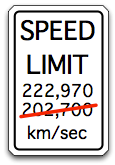
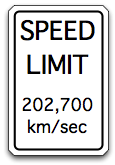
The refractive index is a measure of the speed of light in a medium. The speed of light in vacuum is 300,000 kilometers per second, which is defined as an index of 1. The core of a typical fiber optic cable has an index of 1.48, so the speed of light there is (300,000/1.48) = 202,700 kilometers per second.
It is roughly 8,200 kilometers from Tokyo to San Francisco.

The round trip time through transpacific fibers due solely to speed of light is roughly (2 * 8,200 km / 202,700 km/sec) = 81 milliseconds. Fibers do not run directly from the San Francisco Bay to the Tokyo harbor, so the actual distance is somewhat longer. Traceroute across the NTT network shows the round trip across the ocean is about 100 msec. A small portion of this is FIFO delay in regenerators along the ocean floor and queueing delay in switches at either end. Another portion is software overhead, as traceroute is handled in the slowpath of typical routers. The rest is the time it takes for light to propagate across the span.
7  ae-7.r20.snjsca04.us.bb.gin.ntt.net (129.250.5.52)  50.115 ms
   ae-8.r21.snjsca04.us.bb.gin.ntt.net (129.250.5.56)  51.020 ms
   ae-7.r20.snjsca04.us.bb.gin.ntt.net (129.250.5.52)  50.165 ms
8  as-0.r21.tokyjp01.jp.bb.gin.ntt.net (129.250.5.82)  154.821 ms
   as-2.r20.tokyjp01.jp.bb.gin.ntt.net (129.250.2.35)  147.516 ms  153.187 ms
100 Gigabit Ethernet is nearly done, with products already available on the market. Research into technologies for Terabit links is ramping up now, including one at UCSB which triggered this musing. Dan Blumenthal, a UCSB professor involved in the effort, said that new materials for the fiber optics might be considered: "We won't start out with that, but it'll move in that direction," (quoting from Light Reading).
Fiber with a 10% lower refractive index would increase the speed of light in the medium by 10%. It would decrease the round trip time across the Pacific from ~100 msec to ~90 msec. One of my favorite Star Trek lines is from Déjà Q, a casual suggestion to "Change the gravitational constant of the universe." This is a case where we can make the web faster by changing the speed of light, though we need only do so within fiber optic cables and not the entire universe.
I admit that I have absolutely no understanding of the chemistry involved in fiber optics. Silica is doped with compounds to get the desired properties, including some which raise or lower the refractive index. There are tradeoffs between clarity/lossiness, dispersion, and refractive index which I don't understand. However I think its important to properly weigh the value of lowering the refractive index: it makes the web faster. We can do a lot with caching content locally and distributing datacenters around the planet, but in the end sometimes bits need to go off to find the original source no matter where it might be.
Also to state it clearly this consideration is only applicable to long range lasers, with a reach in tens of kilometers. The initial Terabit Ethernet work will almost certainly be on short range optics for use within facilities, where the propagation delay is insignificant compared to other delays in the system. Its more important to optimize the power consumption and cost of short range lasers than to worry about microseconds of delay. Long reach optics have different constraints, and there we have a once-in-a-generation opportunity to make wide area networks faster.
Dear Twitter,
Idea: Longer prose via Tweet fragmentation and reassembly. Implementation can be considered complete once it has reinvented TCP.
You're welcome.
A system which stays up for weeks or months at a time needs to monitor various facets of its operation to alert an operator if something unusual occurs. One of the things which should be monitored is disk space, as a full filesystem tends to expose lots of strange and wonderful failure modes. I suspect such monitoring is commonly implemented by invoking popen("df -k") and parsing the output. An alternative is to use the same calls which df uses: getmntent and statfs.
setmntent and getmntent parse a file listing mounted filesystems, generally /etc/mtab on Linux systems. The getmntent_r variant shown below is a glibc-specific extension which is thread safe, requiring that a block of memory be provided in which to store string parameters like the mount point.
#include <mntent.h>
#include <stdio.h>
#include <sys/stat.h>
#include <sys/types.h>
#include <sys/vfs.h>
#include <unistd.h>

int main(void) {
  FILE* mtab = setmntent("/etc/mtab", "r");
  struct mntent* m;
  struct mntent mnt;
  char strings[4096];
  while ((m = getmntent_r(mtab, &mnt, strings, sizeof(strings)))) {
    struct statfs fs;
    if ((mnt.mnt_dir != NULL) && (statfs(mnt.mnt_dir, &fs) == 0)) {
      unsigned long long int size = fs.f_blocks * fs.f_bsize;
      unsigned long long int free = fs.f_bfree * fs.f_bsize;
      unsigned long long int avail = fs.f_bavail * fs.f_bsize;
      printf("%s %s size=%lld free=%lld avail=%lld\n",
             mnt.mnt_fsname, mnt.mnt_dir, size, free, avail);
    }
  }

  endmntent(mtab);
}
This code likely fails when there are stacked filesystems, where multiple filesystems are mounted one atop another on the same directory. This is done for union mounts where a read-only filesystem like squashfs has a read-write filesystem mounted atop it as an overlay. statfs will retrieve only the topmost filesystem at that mount point. I don't have a solution for this, if anyone can provide one in the comments I'll add it as an update here.
 As it was located near the center of the US auto industry, there was an extensive automotive program at the University of Michigan (Ann Arbor) with an assortment of guest speakers from the Big Three. I went to several presentations that made quite an impression. One of them was about self-driving cars... in 1991.
The system described then relied on sensors attached to the bottom of the vehicle. Major highways would be equipped with copper wires running down the center of each lane, which the car would track in order to correct its course. I don't recall if the wire would actively broadcast a signal or be passively detected, nor how they would avoid running into other cars. As only major highways would be thus equipped, the driver had to take over in order to exit the highway and transit surface streets.
The presenter at that time was emphatic that the technology would be deployed within 10 years, because the economics were compelling. It was provably cheaper to increase the carrying capacity of highways using this system than by adding lanes. The wires were rapidly installed by making a narrow slit down the roadway, inserting a flexible conduit, and sealing the road behind. It was the same process as was being used to run fiber optics across the nation at that time, and was well understood. The added cost to vehicles would be subsidized using money saved from highway budgets. After paying for road retrofits and vehicle subsidies, the system would still be substantially cheaper than the status quo.
Of course, no such scheme made it out of the test facilities. Twenty years later, self-driving car designs no longer rely on modifications to the roads. Now the cars have an extensive map of the expected topology and navigate by comparing what they sense with what they expect.
I think there are several lessons in this.
Each such lesson has been shown over and over, of course. We continue to make the last mistake all the time on the Web, designing solutions which work fine except for NAT, or HTTP proxies, or URL shorteners, or some other grungy but essential detail of how the Internet actually functions.
Spanning Tree: L2 protocol to transform complete network failure due to topology loop into a never-ending series of more subtle failures.
Per-Vlan Spanning Tree: L2 protocol designed to transform complete network failure due to topology loop into up to 4094 smaller failures.
VRRP: a mechanism by which the possibility of an outage due to loss of a router is replaced by the certainty of an outage due to VRRP.
ARP: a protocol to launch periodic, unannounced stress tests of network infrastructure.
IP Multicast: awesome solution in search of a suitable problem, for at least 25 years.
RIP: a routing protocol which no-one will admit to using.
IGRP: a routing protocol which no-one should be using.
IS-IS: a routing protocol which no-one thinks of using.
DVMRP: a routing protocol which no-one has even heard of using.
ASN.1: Leftover cruft from when TCP/IP was deployed "as a stepping-stone to eventual deployment of the OSI suite of protocols."
Peerritation [peer-i-tay-shun] (noun) : Unreasonable hostility felt toward the subject of the last peer review left to be written.
"I'd be done if it weren't for that guy!"